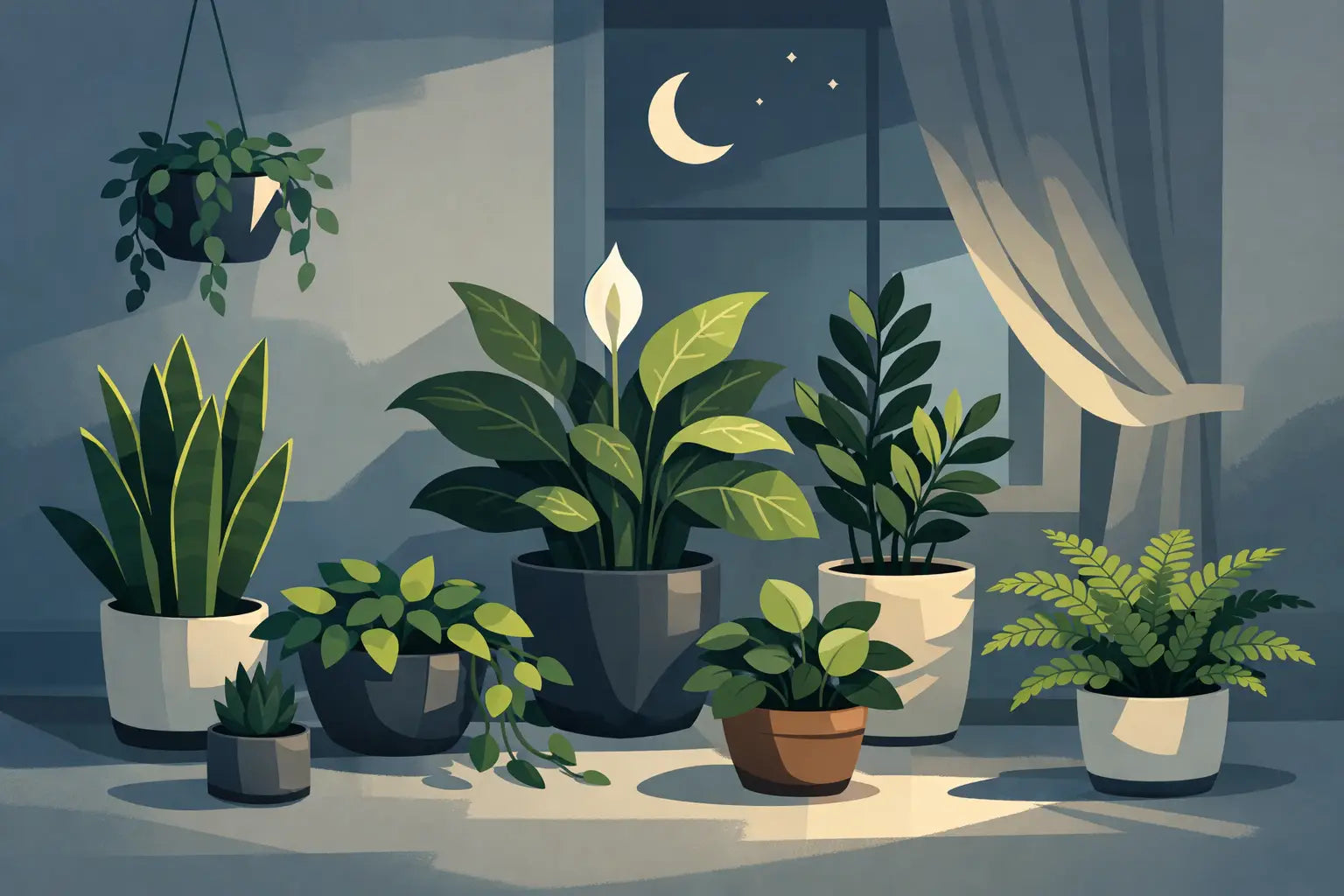
A beautiful room does not always come with a bright window. Apartment hallways, interior offices, hotel lobbies, and corners shaded by neighboring buildings can all feel harder to decorate with living greenery. If you are asking what plants survive low light, the good news is that several elegant indoor plants can stay healthy with modest natural light and sensible care.
The key is choosing plants that tolerate lower light, rather than expecting any plant to grow in complete darkness. Low light means a space where you can comfortably read during the day without switching on a lamp. It may be a few feet from a window, behind sheer curtains, or in a room with indirect daylight. Even the toughest plant still needs some light to live.
What Plants Survive Low Light in Homes and Offices?
These plants are excellent choices when you want lasting color, shape, and freshness without placing every pot directly beside a sunny window. They are especially useful for busy homes and professional spaces where easy care matters as much as polished presentation.
1. ZZ Plant
The ZZ plant is one of the most dependable low-light choices available. Its naturally glossy, deep green leaves give it a clean, premium look that works beautifully in modern living rooms, reception areas, and offices. It stores water in thick underground stems, so it is forgiving if watering is occasionally delayed.
Let the potting mix dry well between waterings. The biggest risk is overwatering, particularly in an air-conditioned room where soil takes longer to dry.
2. Snake Plant
Tall, architectural, and remarkably easy to style, snake plants bring structure to narrow corners, entryways, and desk-side spaces. Their upright leaves make a strong visual statement without taking up much floor space. They tolerate low light well, though brighter indirect light can encourage fuller growth.
Water sparingly. A snake plant would rather be slightly dry than sit in wet soil, so choose a pot with drainage and avoid frequent small waterings.
3. Pothos
Pothos is a favorite for shelves, hanging planters, and trailing displays. Its heart-shaped leaves soften hard edges in offices and apartments, and varieties with mostly green leaves are particularly comfortable in lower-light spots. Variegated pothos can survive in low light too, but its lighter patterns may become less pronounced.
Water when the top layer of soil feels dry. If stems become long with wide gaps between leaves, move the plant a little closer to filtered daylight.
4. Heartleaf Philodendron
For an easy, lush look, heartleaf philodendron is hard to beat. It is adaptable, forgiving, and naturally suited to trailing from a console table or climbing a small support. The rich green leaves hold their color well in modest light, making this a practical choice for beginners.
Keep it away from cold air blasts and water once the upper portion of the mix has dried. A regular wipe with a soft, damp cloth keeps the leaves fresh and display-ready.
5. Cast Iron Plant
The cast iron plant earned its name for good reason. It is slow-growing but exceptionally patient with shade, uneven watering, and indoor conditions that challenge more delicate varieties. Its long, dark leaves bring a calm, refined finish to understated interiors.
This is a smart option for a dim hallway or a low-light office corner where you want greenery without a demanding care routine. Let the soil partly dry before watering, and avoid placing it in direct afternoon sun.
6. Chinese Evergreen
Chinese evergreens offer more decorative leaf patterns than many traditional low-light plants. Depending on the variety, leaves may feature silver, cream, or soft green markings that brighten a space without relying on flowers. Darker green varieties are generally the strongest performers in lower light.
They prefer lightly moist soil but do not enjoy soggy roots. Keep them away from strong drafts, which can cause leaf edges to brown in heavily air-conditioned spaces.
7. Dracaena
Dracaenas are ideal when a room needs height and a more substantial silhouette. Their narrow leaves and cane-like stems suit contemporary homes, meeting rooms, and hospitality settings where a simple tabletop plant may feel too small. Many varieties tolerate medium to low indirect light, although they will grow more slowly in dim conditions.
Allow the top few inches of soil to dry before watering. If leaf tips turn brown, check for dry air, inconsistent watering, or mineral-heavy water.
8. Parlor Palm
A parlor palm adds softness and movement without demanding a sun-filled room. Its fine, arching fronds work well beside sofas, in bedrooms, or in reception areas that need a welcoming touch. It prefers bright indirect light but remains one of the more reliable palms for lower-light interiors.
Keep the soil lightly moist rather than soaked. Because palms can collect dust, gently clean the fronds from time to time so they can use the available light efficiently.
9. Peace Lily
Peace lilies are often chosen for their elegant leaves and occasional white blooms. They can tolerate low light, though flowering is more likely in brighter indirect conditions. In a dim room, think of the peace lily as a foliage plant first, with blooms as a welcome extra rather than a guarantee.
This plant gives a clear signal when thirsty: its leaves may droop slightly. Water thoroughly when this happens, then allow excess water to drain away. Keep it out of reach of pets, as it is not pet-friendly.
10. Aspidistra and Aglaonema Displays
For larger projects, a thoughtfully arranged combination can look more elevated than a single plant. Pairing cast iron plants with Chinese evergreens creates a layered display of dark green leaves, varied textures, and dependable low-light performance. This approach works especially well in office entrances, lounge areas, and hospitality spaces where greenery should feel intentional from every angle.
The trade-off is that mixed displays need compatible watering schedules. Choose plants with similar needs, use individual nursery pots inside decorative planters when possible, and check each plant before watering the whole arrangement.
Low Light Does Not Mean No Light
A common mistake is placing a plant in a windowless room and expecting it to thrive indefinitely. Plants use light to make energy, so even low-light survivors need access to ambient daylight. If a space has no natural light at all, consider rotating plants with brighter areas or adding a suitable grow light.
Watch the plant, not just the label. Leaves that fade, growth that becomes sparse, or soil that stays wet for unusually long periods may mean the location is too dark. Moving the plant even a few feet closer to a window can make a meaningful difference.
How to Keep Low-Light Plants Looking Their Best
Low-light plants usually grow more slowly, which means they need less water and less fertilizer than plants in bright spaces. Water only after checking the soil with your finger. For most varieties listed here, damp soil is fine, but constantly wet soil is not.
Choose a decorative pot that suits your room, but make sure the plant has proper drainage inside it. A premium planter can transform the look of a space, yet healthy roots remain the priority. Use a nursery pot with drainage inside a cover pot, then empty any pooled water after watering.
Dust also matters more than many people realize. A layer of dust blocks valuable light from reaching leaves, particularly in offices near roads or air-conditioning vents. Wipe broad leaves gently every few weeks and turn the pot occasionally so the plant grows evenly.
For UAE homes and workplaces, placement deserves extra attention. Bright outdoor heat can be intense, while indoor AC can dry the air and cool a plant quickly. Keep low-light plants away from direct sun through glass, as well as directly beneath vents. A calm spot with indirect daylight is usually the sweet spot.
Choosing the Right Plant for Your Space
The best choice depends on the look you want and how much care you can realistically give. Choose a ZZ plant or snake plant for a sleek, low-maintenance statement. Pick pothos or heartleaf philodendron when you want soft, trailing greenery. Go for a dracaena or parlor palm when height will make the room feel more complete.
If you share your home with pets, check pet safety before purchasing, since several popular low-light plants are not suitable for curious cats or dogs. If you are styling an office, prioritize durable varieties with consistent care needs and choose planters that complement the furniture, flooring, and brand atmosphere.
At Well Potted Plants, carefully selected low-light greenery and ready-to-display planters make it easier to bring a finished, welcoming look to the spaces that need it most. Start with one healthy plant in the right position, give it steady care, and let that quiet corner become part of the room people remember.
Share:
How to Choose Office Plants That Actually Thrive
Real Plants vs Artificial for Beautiful Spaces