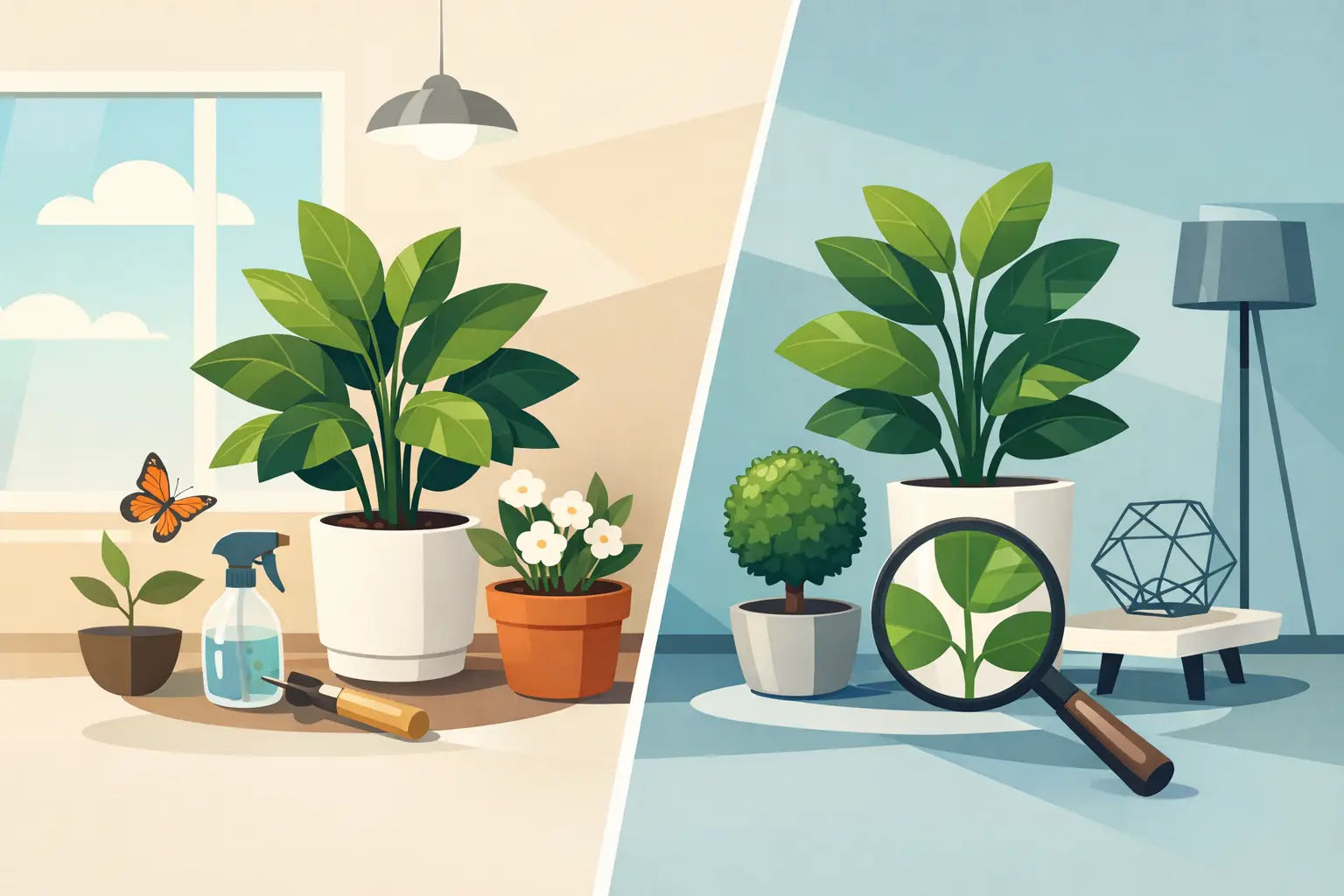
A tall fiddle leaf fig beside a sunny window can make a living room feel finished. A lifelike artificial olive tree can create that same visual confidence in a dim lobby where no plant would thrive. The real plants vs artificial decision is not about choosing the universally better option. It is about choosing greenery that looks right, works with your routine, and continues to elevate your space long after delivery day.
For homes, offices, restaurants, and hospitality spaces, both options have a place. The smartest interiors often use a thoughtful mix: living plants where light and care make sense, and premium artificial greenery where consistency matters most.
Real Plants vs Artificial: What Changes in Your Space?
Real plants bring more than color. Their natural leaf variation, new growth, and organic shape give a room a sense of life that is difficult to copy exactly. A healthy monstera, bird of paradise, or indoor palm becomes part of the room's personality. It softens clean lines, adds depth around furniture, and makes an entryway or office corner feel more welcoming.
They also change over time. For plant lovers, that is part of the appeal. New leaves are rewarding, and a well-placed plant can grow into a genuine statement piece. This option is especially satisfying in bright homes, sunlit offices, and outdoor areas where the environment already supports healthy growth.
Artificial plants offer a different kind of value: dependable polish. They stay full, green, and photo-ready through busy workweeks, travel, seasonal changes, and low-light conditions. A high-quality artificial plant can bring height to an empty corner, soften a reception desk, or add greenery to a shelf without asking anyone to check soil, rotate a pot, or adjust watering.
The key phrase is high quality. Cheap faux greenery can look flat, overly glossy, or repetitive. Premium artificial plants have more natural color variation, realistic stems, and carefully shaped foliage. Styled in a decorative pot with a finished top layer, they can look convincing from the distance where most guests will see them.
Choose Based on Light, Time, and Expectations
The best choice usually becomes clear when you look at three practical factors: available light, the level of care you can provide, and how permanent you need the finished look to be.
When real plants are the better fit
Choose living plants when your space has suitable light and someone can give them basic, consistent attention. This does not mean you need to become a plant expert. Many beginner-friendly plants are remarkably forgiving when they are matched to the right location.
A bright room can support statement plants that deserve to be seen. Low-light rooms can still enjoy options such as snake plants, ZZ plants, pothos, and certain dracaenas. The goal is not to force a plant into a difficult corner because it matches the décor. Start with the corner, assess the light, and select a plant that can be healthy there.
Real plants are also a strong choice for people who want their spaces to feel personal rather than perfectly fixed. A thriving plant develops character. Its leaves may turn toward the window, its stems may become fuller, and it may need a larger pot in time. That evolution makes the display feel authentic.
For offices, real greenery can work beautifully when plant care is assigned clearly or supported by a maintenance service. A shared workplace should not depend on vague promises that someone will water the plants when they remember. Regular care protects the investment and keeps the display looking premium.
When artificial plants make more sense
Artificial greenery is ideal for locations that are difficult by nature: windowless rooms, dark hallways, air-conditioned spaces with inconsistent conditions, high shelves, and areas where watering would be inconvenient. It is also practical for rental properties, model spaces, event setups, and businesses that need a consistently polished look every day.
Consider artificial plants if you travel frequently, manage several properties, or simply want décor with no ongoing care schedule. A large faux tree can fill visual space immediately without waiting for growth or worrying about leaf drop after a change in environment.
They are especially useful in commercial settings where presentation cannot be left to chance. A reception area, retail display, or dining space may need greenery in a spot with poor light but high visibility. In that case, a realistic artificial plant is often a better design decision than a struggling real one.
Artificial plants still need attention, just less of it. Dust can dull leaves quickly, particularly in busy spaces. A gentle wipe or light dusting every few weeks keeps foliage fresh and prevents the display from looking neglected.
Care and Cost: Look Beyond the First Purchase
A real plant has an ongoing care cost, even when it is low-maintenance. It may need proper potting, occasional fertilizer, pruning, pest checks, and eventual repotting. In return, you get a living feature that can grow and become more impressive with time.
Artificial plants generally have a higher upfront price when you choose realistic materials and a well-finished design. But their cost is predictable. There is no replacement soil, no watering routine, and no concern about pests. For a business decorating multiple rooms, that predictability can be a major advantage.
Neither option is automatically more economical. A hardy real plant in the right conditions can remain beautiful for years with minimal expense. An artificial tree can also last for years if it is made well and kept clean. The expensive choice is often the wrong choice: a real plant placed where it cannot thrive, or a low-quality faux plant that needs replacing because it never looked convincing.
If you are buying real plants, quality at the start matters. Healthy, pest-controlled plants that are selected for their condition give you a stronger beginning. The right pot matters too. It should support the plant's needs while complementing the furniture, flooring, and color palette around it.
Style Is About Placement, Not Just Plant Type
Real and artificial plants can both look elevated when the scale is right. A small plant on a large empty floor will disappear. An oversized tree squeezed beside a narrow sofa will make the room feel crowded. Before choosing, look at the vertical space as well as the floor space.
Large plants work best when they have room to breathe. Use them to frame an entry, anchor a lounge corner, soften a glass wall, or add height beside a console. Smaller plants are ideal for desks, coffee tables, open shelving, and grouped displays where texture matters more than height.
Pots are not an afterthought. A decorative planter can make a simple plant feel intentional, while the wrong pot can make even a premium tree look temporary. Choose finishes that support the room: textured neutrals for calm spaces, matte black for modern offices, warm ceramics for lived-in homes, or sculptural forms for a more refined statement.
For the most natural result with artificial greenery, avoid placing every faux plant in the same obvious location. Mix heights, use pots with weight and texture, and keep the leaves clean. If your space includes both types, place real plants where guests can appreciate their details and use artificial pieces in the harder-to-serve corners.
A Practical Choice for Homes and Businesses
For a first apartment, a beginner plant set or a few low-maintenance real plants can build confidence without creating pressure. Add an artificial piece for the dark corner that would otherwise stay empty. You get the satisfaction of caring for living greenery without designing the whole room around a watering schedule.
For an office or hospitality space, start with the customer experience. Where will people pause, wait, meet, or take photos? Those are the places that benefit from larger, more considered greenery. Use living plants in areas with appropriate light and dependable maintenance. Use artificial plants where you need a flawless look with minimal interruption.
Well Potted Plants helps make that decision easier with handpicked greenery, decorative pots, and plant care support for spaces that need more than a quick décor purchase. The aim is not to add plants for the sake of it. It is to create a finished environment that feels fresh, welcoming, and well cared for.
Choose the plant that your space can support with confidence. A healthy real plant and a realistic artificial one can both make a room feel more complete - as long as each is placed where it has the best chance to look beautiful.
Share:
What Plants Survive Low Light? 10 Best Choices
Office Plants That Make Workspaces Feel Better