
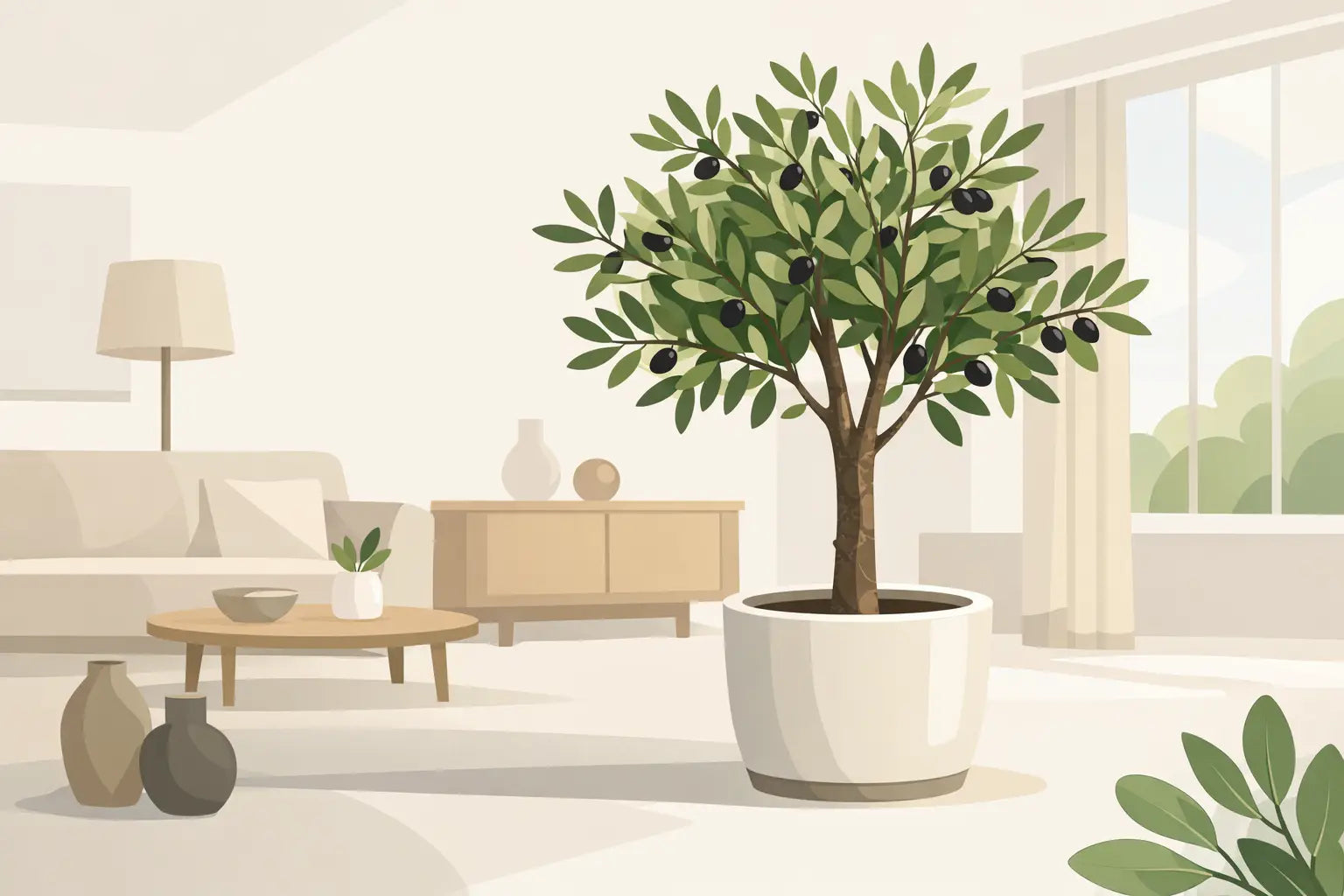
An olive tree can make a room look instantly more finished. It has that clean, architectural shape people love in styled living rooms, entryways, and bright offices. But an honest olive tree indoor review has to go beyond looks, because this plant is beautiful, a little demanding, and not the right fit for every space.
If you want a plant that reads premium from day one, olive trees deliver. The silvery green leaves, natural branching, and sculptural trunk give them a polished presence that works especially well in modern interiors, warm neutral spaces, and hospitality-style settings. They feel refined without looking fussy. That is the appeal.
The question is whether that appeal holds up once the tree is living inside your home or workplace full time. Sometimes it does. Sometimes the plant is telling you, very clearly, that it would rather be outside.
Olive tree indoor review: what stands out first
The strongest reason people buy an indoor olive tree is visual impact. Few plants create the same calm, elevated look while still feeling natural and organic. A healthy olive tree does not need oversized leaves or dramatic flowers to stand out. Its shape does the work.
That makes it a smart choice for buyers who want one statement plant instead of several smaller ones. In apartments, it can soften hard corners and add height without making the room feel crowded. In offices, it can make reception areas, meeting rooms, and executive spaces feel warmer and more considered. In hospitality settings, it gives a relaxed Mediterranean feel that reads expensive when styled well.
There is also a practical upside to that elegant look. Olive trees tend to pair easily with decorative pots and a wide range of interior styles. They do not lock you into one design direction. If your home leans minimalist, coastal, earthy, or contemporary, they usually fit.
Where indoor olive trees perform well
An indoor olive tree tends to do best in spaces with strong natural light and a little airflow. Think large windows, sunrooms, bright corners, glass doors, and open-plan rooms that do not stay stuffy. If your space gets several hours of direct sun, you are already closer to success than many indoor plant buyers.
This is why olive trees often perform better in bright homes, villas, and well-lit commercial spaces than in darker apartments with small windows. They are not low-light plants dressed up for a prettier product photo. They need the real thing.
That does not mean every bright room is automatically suitable. Air conditioning, harsh indoor climate swings, and being tucked too far from the window can all affect performance. A tree that looked perfect on delivery can start dropping leaves a few weeks later if the environment is working against it.
The trade-off: beauty versus ease
Here is the most honest part of any olive tree indoor review: this is not the easiest indoor plant to keep looking perfect.
Olive trees are often bought by people who want a stylish, designer look with minimal effort. The problem is that olive trees prefer conditions that many indoor spaces simply do not provide consistently. They want plenty of sun, careful watering, and enough stability to settle in without repeated stress.
If you are comparing an olive tree with beginner-friendly options, the olive tree usually loses on ease of care. It is less forgiving than many common indoor plants. Miss the light requirement, overwater it, or move it around too often, and the tree will respond.
That response usually shows up as leaf drop. And when olive trees drop leaves indoors, buyers often assume the plant arrived weak. Sometimes that is true, but often the issue is the room, not the tree.
Light is the deciding factor
If there is one thing that determines whether an indoor olive tree feels rewarding or frustrating, it is light. Lots of it.
Olive trees are sun-loving plants. Indoors, they want to be placed as close as possible to your brightest window, ideally one with direct sunlight for a good part of the day. Filtered light may keep some plants alive, but olive trees are not impressed by “bright-ish.”
This matters because the tree can still look healthy when you first receive it. A well-grown plant may hold its shape for a while, even in less-than-ideal conditions. That can create false confidence. Then, a few weeks later, the decline begins.
For buyers in the UAE, this can be a little easier in naturally bright homes, but indoor placement still matters. Strong outdoor sun does not help much if the tree is sitting deep inside a room with tinted glass and constant AC. Position is everything.
Watering needs are simple, but easy to get wrong
The second challenge is watering. Olive trees do not want wet soil all the time. They prefer the soil to dry a bit between waterings, and they generally suffer more from overwatering than underwatering.
This is where good intentions can backfire. Many people see a few dropping leaves and respond by watering more. If the real issue is low light or root stress, extra water can make things worse.
A better approach is to check the soil before watering. If the top layer still feels moist, wait. If it is dry and the pot drains properly, water thoroughly and let excess water escape. Decorative pots without drainage can create problems fast, especially indoors where soil dries more slowly.
Is an indoor olive tree worth buying?
For the right buyer, yes. For the wrong space, no.
An olive tree is worth it if you want a premium statement plant, you have strong natural light, and you are comfortable giving it a little attention. It is also worth it if your goal is visual transformation. Few plants create that styled, high-end feeling so quickly.
It may not be worth it if your room is dim, you travel often, or you want a plant you can mostly forget about. In those cases, the olive tree can become a stressful purchase instead of a satisfying one.
This is where buying quality matters. A healthy, pest-controlled, well-presented tree gives you a much better starting point. So does buying from a plant retailer that understands delivery, replacement support, and how to match plants to real homes and workspaces instead of idealized photos. That support can make a major difference when you are choosing a plant with higher expectations.
Olive tree indoor review for homes and offices
In homes, olive trees shine best as decor-first plants. They work beautifully in living rooms, entryways, dining spaces, and bright bedrooms with a clean layout. They are especially effective when you want one plant to carry the room instead of mixing many varieties.
In offices, they can look exceptional in bright reception areas and executive interiors. They create a polished, welcoming effect that feels more elevated than standard office greenery. That said, office conditions are often tricky. Constant air conditioning, inconsistent care, and limited direct sun can reduce long-term performance.
For commercial buyers, this is where plant maintenance support becomes valuable. A tree that suits the design concept still needs proper care after installation. If the setting is image-conscious, keeping the plant in top condition is part of the investment.
What to check before you buy
Before bringing one home, ask yourself a few honest questions. Do you have a truly sunny spot, not just a bright room? Can you keep the watering controlled instead of frequent? Are you buying it for real growing conditions or just for the look?
Also consider size. A taller olive tree can be stunning, but larger plants need the right scale around them. If the tree is too small, it may disappear visually. If it is too large for the room, it can feel forced. The best result comes when the tree matches both the light and the layout.
Pot choice matters too. A premium planter elevates the entire presentation, but function comes first. Stable placement and proper drainage will help the tree settle faster and stay healthier.
The real verdict
Olive trees indoors are not overrated, but they are often oversimplified. They are sold for their beauty, and that beauty is real. What gets missed is that they are best for bright, intentional spaces and buyers who want a statement plant they can actually support.
When the conditions are right, an indoor olive tree feels effortless, elegant, and well worth the money. When the conditions are wrong, it becomes a reminder that not every beautiful plant is a beginner plant. If you choose one with clear eyes and a sunny window, it can be one of the most rewarding pieces in the room.
The best plant purchases are the ones that still look good a month later, not just on delivery day.
Share:
Best Landscaping Plants for Villa Garden
10 Best Low Light Office Plants for Better Workspaces