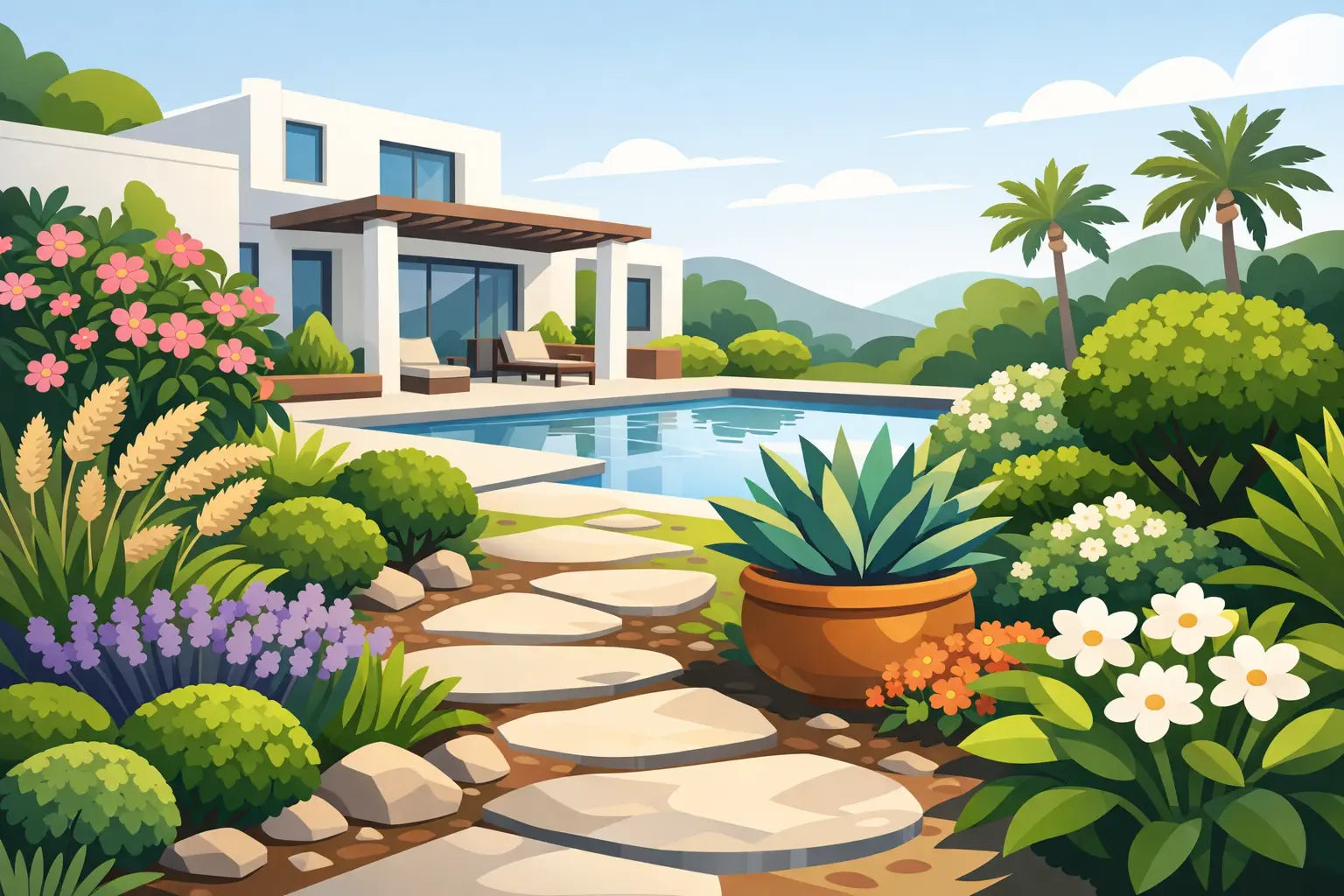
A villa garden should feel finished the moment you step outside. Not crowded, not high-maintenance, and not filled with plants that look good for one month and struggle the rest of the year. The best landscaping plants for villa garden spaces do more than add greenery - they create privacy, soften hard edges, frame outdoor seating, and give the entire property a more polished, premium look.
That matters even more when you want a garden that looks elegant without becoming a full-time project. In most villa settings, the right planting plan is not about choosing the rarest species. It is about combining structure, shade, texture, and seasonal interest in a way that suits the size of the space, the amount of sun, and how you actually live outdoors.
How to choose landscaping plants for villa garden spaces
Start with function before style. A plant beside the entrance has a different job than one around a pool, boundary wall, or patio. Some are there to make a strong first impression. Others are meant to block an awkward view, cool a bright corner, or make a lawn feel less flat and exposed.
This is where many villa gardens go off track. Homeowners often buy based on appearance alone, then end up with a mix that feels disconnected. A better approach is to think in layers. Trees create height and shade. Shrubs provide fullness and privacy. Groundcovers and accent plants finish the base and keep the garden from looking sparse.
It also helps to be honest about maintenance. Flower-heavy gardens can look beautiful, but they usually need more trimming, feeding, and cleanup. Evergreen structure gives a cleaner look with less fluctuation. If you want a garden that stays attractive with minimal effort, balance decorative plants with reliable backbone planting.
The best plant categories for a villa garden
A strong villa landscape usually includes a few statement plants, a dependable row of structural shrubs, and softer accent planting around paths or seating areas. The mix matters more than having dozens of varieties.
Statement trees that anchor the space
Every larger garden benefits from one or two focal trees. These are the plants that give the property maturity and visual value. Olive trees are a favorite for villa gardens because they feel refined, architectural, and timeless. Their silvery foliage pairs well with modern exteriors, stone finishes, and neutral outdoor furniture. They also work well in formal entry areas or as centered features in gravel beds.
Palm varieties can also be effective, especially in more contemporary landscapes. They bring height and a resort-like look, but placement matters. Too many palms can make a garden feel repetitive rather than designed. Use them where you want vertical drama, not everywhere.
For villas with larger boundary areas, small ornamental trees can soften walls and create better proportion. The key is scale. A tree that is too small can disappear against a tall villa facade, while an oversized canopy can create messy shade and root competition near paving.
Shrubs for privacy, fullness, and structure
If trees are the frame, shrubs are the body of the garden. Dense, evergreen shrubs are often the most useful landscaping plants for villa garden layouts because they help spaces feel enclosed, intentional, and more luxurious.
Boxy, clipped hedges give a formal finish and work especially well near driveways, walkways, and front entrances. Softer shrubs with a rounded habit suit family gardens and poolside areas where you want a relaxed look. Flowering shrubs can add color, but they should be used selectively. Too much flowering detail can make a premium garden feel visually busy.
This is one of those it-depends choices. If your villa has clean architecture and minimal finishes, a restrained shrub palette often looks strongest. If the home has a more traditional exterior, you can layer in more seasonal color without losing balance.
Accent plants that make the design feel complete
Accent plants are what keep the garden from looking flat. These might include sculptural foliage, spiky forms, softer mounding plants, or low-growing greenery that defines the front of a bed. They bring contrast and help each zone feel styled rather than simply planted.
Agave and similar architectural plants can look striking in sunny villa gardens, especially when paired with gravel, stone, or modern pots. They add shape with very little fuss. The trade-off is that bold, sculptural plants can look severe if overused. They are best balanced with softer textures nearby.
Ornamental grasses and low, spreading plants can also be useful around pathways and seating zones. They create movement and make transitions feel smoother. In contemporary landscapes, these details often do more for the overall finish than adding more flower color.
Best landscaping plants for villa garden zones
Not every part of the garden needs the same type of planting. Matching the plant to the zone is what gives a landscape that well-planned look.
Front entrance and driveway
This area should feel neat and welcoming year-round. Structured shrubs, statement potted plants, and one or two strong focal trees work best here. The goal is curb appeal with consistency. Plants that drop too many leaves or need constant reshaping can quickly make the entrance look untidy.
Symmetry often works beautifully in villa entrances. Matching pots, repeated shrubs, and balanced planting on either side of a path give an immediate sense of order and quality.
Poolside planting
Pool areas need a cleaner plant selection. Avoid anything overly messy, thorny, or prone to dropping petals into the water. Foliage-first planting tends to perform better here. Think elegant shrubs, palms used sparingly, and accents that can handle reflected heat.
This is also where texture matters. A poolside garden should feel calm and upscale, not overplanted. Repeating a few premium-looking varieties creates a stronger effect than mixing many types in small quantities.
Boundary walls and privacy edges
Tall walls can make a garden feel boxed in unless they are softened properly. Layered planting helps. Use taller shrubs or narrow trees close to the wall, then medium shrubs and lower accents in front. This breaks up blank surfaces and gives the garden more depth.
If privacy is a major goal, evergreen screening is worth prioritizing over short-term flower color. A thick green border gives immediate value because it improves both appearance and comfort.
Patio and outdoor seating areas
Near seating, plants should support the atmosphere rather than dominate it. Fragrant plants can work well here, as can elegant potted specimens that add definition to corners. Large decorative planters are especially useful in villa gardens because they bring structure without requiring major ground planting.
This is also an ideal place for premium, ready-to-display greenery. Well-shaped potted plants can instantly make a seating space look styled and complete.
Common mistakes when choosing landscaping plants for villa garden projects
One common mistake is buying too many small plants and expecting immediate impact. In a villa garden, undersized planting can make the whole property feel unfinished. It is usually better to invest in fewer, healthier, more established plants that create presence from day one.
Another issue is overcomplicating the palette. Too many plant types can make the design feel patchy. Repetition is what gives gardens a premium look. Using the same shrub in several areas, or repeating the same accent plant along a path, creates visual confidence.
There is also the maintenance trap. Some homeowners choose a lush look without thinking about pruning cycles, irrigation, pest prevention, or seasonal replacement. A beautiful garden should still be manageable. That is why healthy, pest-controlled plants and proper placement matter so much from the start.
What a premium villa garden planting plan should feel like
The best gardens do not feel random. They feel calm, intentional, and easy to enjoy. You notice the shade where you need it, the privacy where it counts, and the softness around hard paving and walls. The planting supports the lifestyle of the home.
For some villas, that means a cleaner, modern scheme with olives, clipped shrubs, and sculptural accents. For others, it means a softer family-friendly layout with layered greenery and selective flowering plants. Neither is automatically better. The right choice depends on the architecture, the outdoor layout, and how much upkeep you want to handle.
At Well Potted Plants, we see the biggest difference when homeowners stop treating outdoor plants as separate purchases and start thinking of them as part of one finished environment. A few well-chosen trees, reliable structural shrubs, and polished potted accents can completely shift how a villa garden looks and feels.
If you are planning your outdoor space, choose plants that give you beauty right away but also hold their shape and value over time. That is what turns a garden from simply green into genuinely elevated.
Share:
Indoor Plant Maintenance Service That Works
Olive Tree Indoor Review: Worth It?