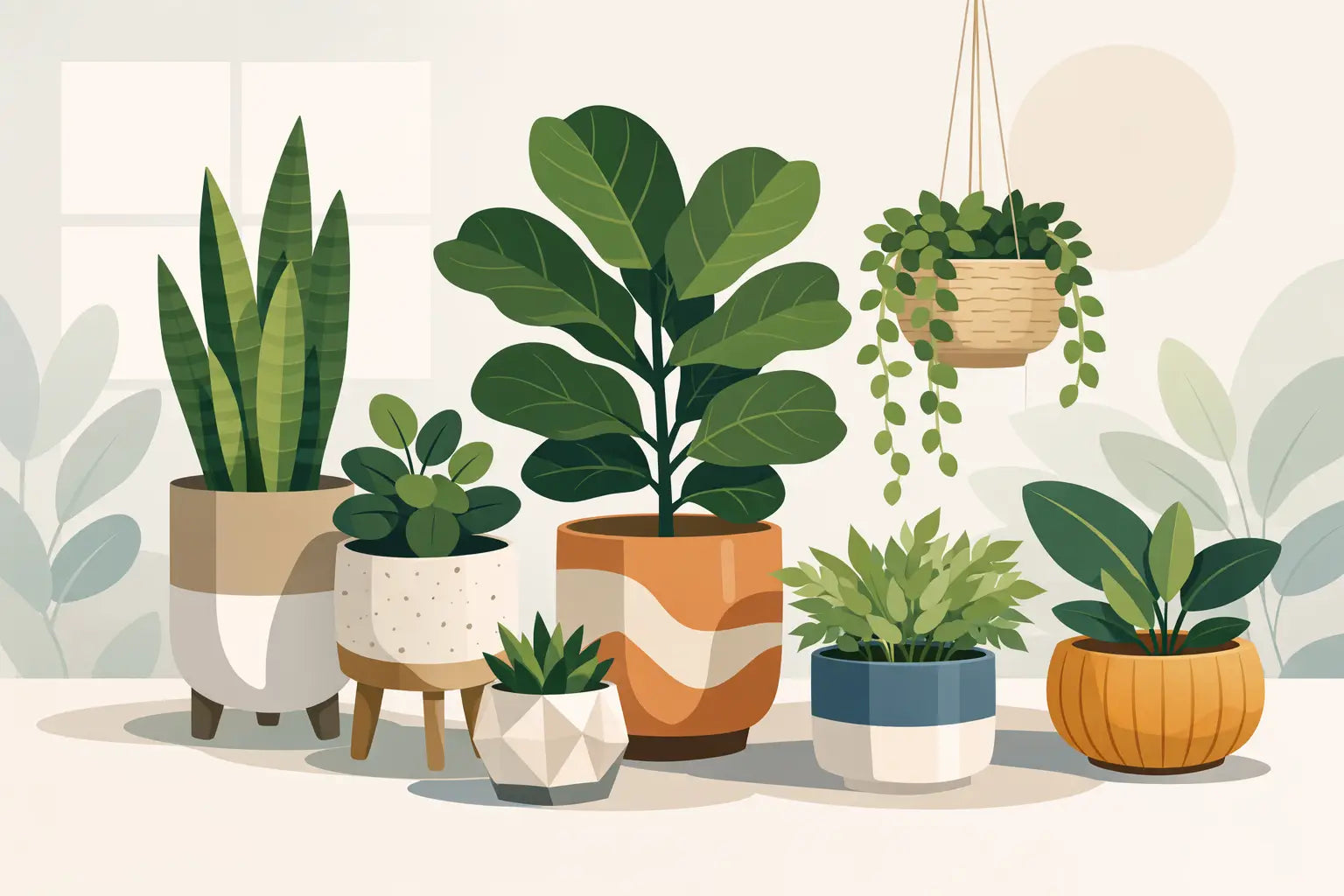
A beautiful plant can still feel unfinished if the pot is wrong. The leaves may be healthy, the size may be perfect, but if the container clashes with the room or fights the plant’s shape, the whole setup loses impact. That is why decorative pots for indoor plants matter so much - they do more than hold soil. They frame the plant, sharpen the style of the room, and make even a simple corner feel considered.
For homes, offices, and hospitality spaces, the right pot can make greenery look intentional from the moment it arrives. It also helps buyers avoid the common problem of bringing home a great plant and then realizing it still needs a proper presentation. When the pot and plant already work together, the result feels polished, premium, and easy.
Why decorative pots for indoor plants change the whole look
Indoor plants naturally soften a space, but the pot determines whether that softness feels casual, elegant, modern, or bold. A tall matte planter gives a snake plant a sharper architectural feel. A rounded textured pot can make a lush pothos or peace lily feel warmer and more relaxed. The plant creates freshness, but the pot tells the design story.
This is especially true in urban interiors where every item is visible and every square foot counts. In an apartment living room, one statement plant in the right decorative pot can do the work of several smaller decor pieces. In an office, matching pots create order and professionalism without making the space feel cold. In a hotel lobby or reception area, decorative planters help greenery look like part of the brand experience rather than an afterthought.
There is also a practical reason buyers care. A ready-to-display setup saves time. Instead of searching for a container later, repotting in a rush, or settling for something that almost works, you get a finished look from day one.
Start with the plant, not the pot
It is tempting to choose the prettiest planter first, but the better approach is to start with the plant’s needs and proportions. A decorative pot should support the plant visually and physically. If the pot is too small, the plant can look cramped. If it is too large, the arrangement may feel unbalanced, and in some cases the growing conditions can become harder to manage.
The shape matters as much as the size. Upright plants usually look strongest in taller pots that echo their vertical growth. Fuller, trailing plants often look best in rounder or lower-profile containers that complement their spread. Large statement plants need visual weight at the base, while compact desk plants can carry more playful finishes without overwhelming the room.
Material also makes a difference. Ceramic offers a refined, premium look and works well in styled interiors. Fiberstone and lightweight composites are popular for larger plants because they give a clean finish without the heaviness of traditional stone or clay. Woven or textured finishes bring softness, though they usually suit protected indoor use best. There is no single best choice - it depends on the plant, the setting, and how much maintenance you want.
Choosing decorative pots for indoor plants by room
Different rooms ask for different things. In the living room, decorative pots often need to do more visual work because they sit in the open and contribute directly to the style of the space. This is where statement planters, sculptural shapes, and elevated finishes earn their place. A large fiddle leaf fig or olive tree in a well-proportioned pot can anchor the room instantly.
Bedrooms usually benefit from quieter choices. Softer tones, simple silhouettes, and subtle textures feel more restful. You still want the pot to look beautiful, but not overly busy. The goal is calm rather than contrast.
For offices, decorative pots should look clean, consistent, and easy to maintain. Neutral colors often work best because they fit a wider range of furniture and branding styles. If the space includes reception desks, meeting rooms, and executive offices, repeating the same planter family in different sizes creates a more premium and organized result.
Restaurants, hotels, and retail spaces need decorative pots that can handle visibility and traffic. Here, scale becomes critical. Small pots can disappear in commercial interiors, while oversized planters help greenery feel intentional and high-value. In these settings, coordinated plant and pot combinations often create the strongest impact with the least decision fatigue.
Color, texture, and finish matter more than people think
Most buyers choose pot color based on what looks safe, which usually means white, beige, black, or gray. Those are reliable choices for a reason. They pair well with most foliage and sit comfortably in modern interiors. But safe does not always mean best.
If your room already has a neutral palette, a textured sand-tone pot can add warmth without demanding attention. If your furniture is dark and structured, a matte black planter can make green leaves look richer and more sculptural. In brighter interiors, soft stone finishes keep the look fresh and airy.
Glossy pots can feel more decorative and dressy, which suits formal corners and hospitality spaces. Matte finishes usually look more current and easier to style. Textured surfaces hide minor marks better and add depth, especially when paired with broad-leaf plants.
The trade-off is maintenance and mood. High-shine finishes can look striking, but they show dust and fingerprints more easily. Very light-colored pots brighten a room, but they can also reveal scuffs faster in busy spaces. Choosing well is not just about style - it is about how the pot will live in the real room.
Drainage, liners, and plant health
A decorative planter should never come at the expense of plant health. This is where many buyers get caught between design and practicality. Some pots include drainage holes, some work as cachepots, and some need an inner nursery pot or liner to make watering easier.
There is no universal rule because the right setup depends on the plant and the owner’s routine. If you tend to overwater, drainage is your friend. If you prefer a cleaner, ready-to-display look, using a healthy plant in its grow pot placed neatly inside a decorative outer pot can be a smart solution. It keeps the presentation beautiful while making care more manageable.
Larger commercial installations often benefit from this layered approach. It makes maintenance easier, reduces mess, and allows teams to swap or service plants with less disruption. For home buyers, it offers confidence - especially if you love the look of premium planters but do not want plant care to become complicated.
When matching sets work - and when they don’t
Matching pots create a tidy, upscale feel, especially in offices, hallways, balconies, and open-plan living areas. They bring rhythm to the space and make different plants feel connected. This works well when you want a clean visual line or when multiple plants need to support a broader interior scheme.
But perfect matching is not always the strongest option. In homes, slight variation often feels more natural and layered. You might keep the same color family while changing the shape or texture. That way, the plants still feel curated without looking too rigid.
A good rule is to match more closely in formal spaces and loosen up in personal ones. Reception areas, conference rooms, and hospitality settings usually benefit from consistency. Living rooms and bedrooms can carry more personality.
The easiest way to get a polished result
The fastest path to a good-looking setup is not buying the most expensive pot. It is choosing combinations that already make sense. Plant size, pot proportion, room style, and practical care all need to work together. That is why curated pairings are so effective for both beginners and busy buyers. They remove guesswork.
At Well Potted Plants, that ready-to-display approach is part of what makes the shopping experience easier. Buyers are not just choosing greenery. They are choosing healthy, handpicked plants presented in a way that looks finished, giftable, and worth placing front and center the moment they arrive.
If you are refreshing a home, staging a workspace, or adding greenery to a client-facing setting, treat the pot as part of the plant, not as an accessory you will figure out later. The right decorative planter does not just complete the look. It gives the whole room a stronger sense of care, quality, and calm.
A well-chosen pot turns plant buying from a small purchase into a visible upgrade, and that is usually the difference people notice first.
Share:
Best Beginner Friendly Houseplant Set
Choosing an Olive Tree for Patio Style