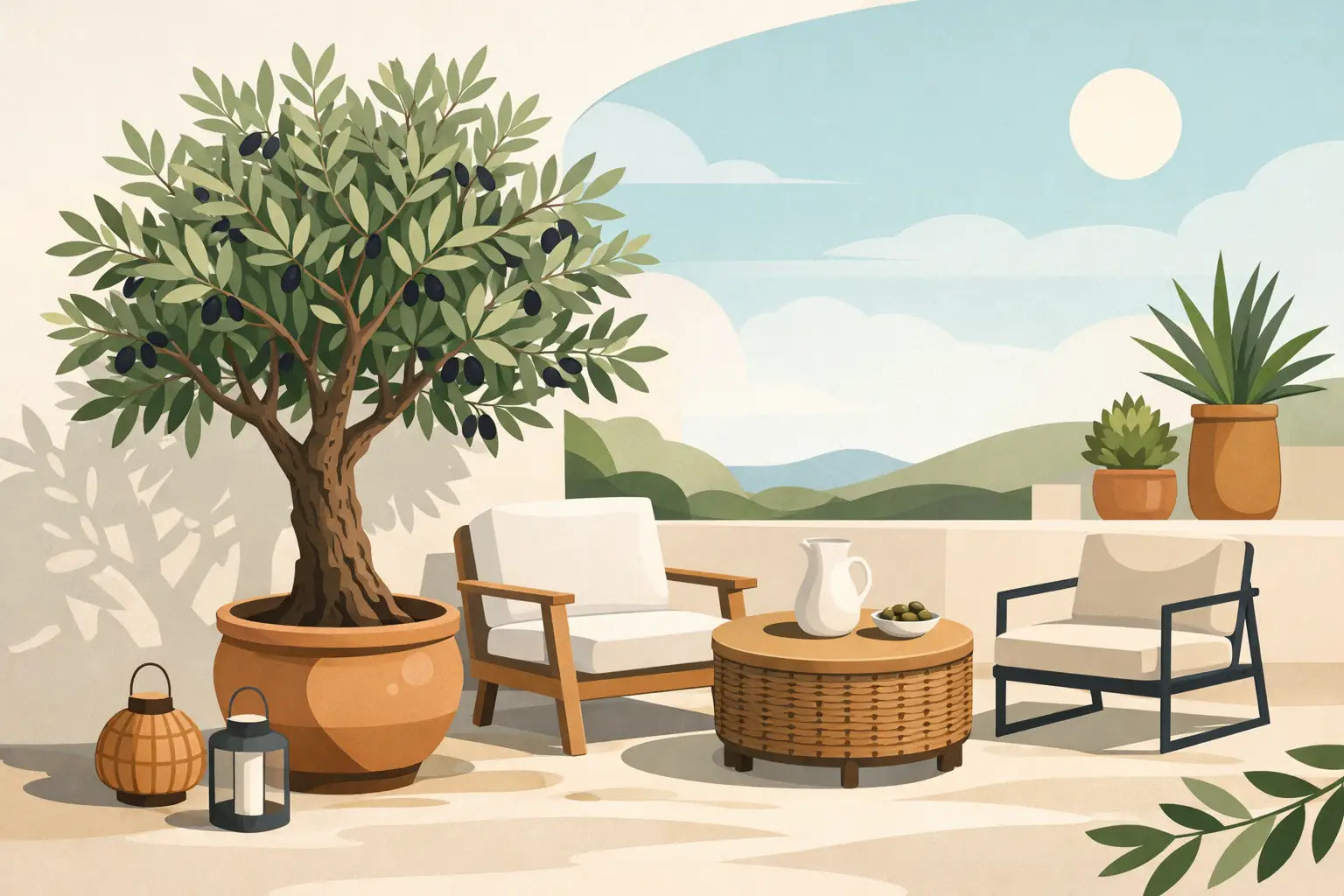
A patio can feel finished the moment an olive tree arrives. The right olive tree for patio styling adds structure, soft silver-green color, and that clean, elevated look people usually spend months trying to create with furniture and accessories alone. It works in modern settings, warm rustic spaces, apartment balconies, and hospitality terraces because it brings presence without looking busy.
Why an olive tree works so well on a patio
Some plants fill space. An olive tree shapes it. The narrow trunk, airy branching, and muted foliage give patios a refined focal point that feels calm rather than crowded.
That balance matters, especially in outdoor spaces where every piece is visible at once. Cushions, tables, lanterns, planters, and flooring already compete for attention. An olive tree settles the scene. It introduces height, texture, and a sense of permanence, which is why it suits both residential and commercial spaces that need to feel polished quickly.
There is also a practical side to its appeal. Olive trees are naturally associated with sunny climates, so they make visual sense on bright patios and terraces. They look right at home in heat, against stone, concrete, wood, or neutral outdoor fabrics. If you want a plant that feels premium and easy to style, few options do the job as neatly.
How to choose the right olive tree for patio spaces
The best choice depends less on the tree itself and more on the way your patio is used. A compact balcony with two chairs needs a different scale than a villa entrance or restaurant terrace.
Start with proportion. If the tree is too small, it disappears and feels like an afterthought. If it is too large, it can make a seating area feel tight and awkward. For smaller patios, a slim, well-pruned olive tree in a medium decorative pot usually gives enough impact without overwhelming the layout. In larger spaces, a fuller canopy or a pair of matching olive trees can create symmetry and more presence.
Shape matters too. Some buyers prefer a clean standard form with a visible trunk and rounded head because it looks formal and styled from day one. Others want a looser, more natural silhouette for a relaxed Mediterranean feel. Neither is better. It depends on whether your patio design leans crisp and architectural or soft and organic.
If convenience matters most, choose a healthy, established tree that already looks balanced in its pot. That saves time, reduces risk, and gives you a ready-to-display finish from the start.
Pick the right size for your layout
A common mistake is choosing by plant height alone. Width matters just as much, sometimes more. A tree with a broad canopy can interfere with pathways, dining chairs, or sliding doors even if the height looks perfect.
For compact urban patios, a tree that adds vertical interest without heavy spread is often the smartest fit. For open patios, a wider canopy can soften hard edges and make the space feel more layered. If you are styling a business setting such as a cafe terrace, hotel entrance, or office balcony, go slightly larger than you think you need. Commercial spaces often absorb scale better than homes do.
Match the pot to the tree, not just the decor
A beautiful olive tree in the wrong pot never looks fully convincing. The planter should support the root system, suit the mature look of the tree, and visually ground it in the space.
Neutral pots tend to work best because they let the foliage stand out. Stone-look finishes, textured ceramics, matte black, sand, off-white, and earthy clay tones all complement olive trees naturally. The more formal the patio, the cleaner the planter shape should be. The more relaxed the setting, the more room you have for texture and warmth.
The practical side is just as important. A pot needs drainage, enough room for healthy roots, and enough weight or stability to handle outdoor conditions. A light decorative planter may look great online and feel disappointing in real life if it tips easily or traps water.
Light is the deal-breaker
If your patio gets strong sunlight for much of the day, an olive tree is a natural fit. If the area is heavily shaded by walls, roofs, or neighboring buildings, the tree may survive but it will not always look its best.
This is where expectations matter. People often choose olive trees for the aesthetic, which makes sense, but the look depends on the growing conditions. In bright light, the foliage stays more attractive and the structure remains stronger. In lower light, growth can become weaker or less balanced over time.
That does not mean every patio must be fully exposed all day. It means you should be honest about your conditions before buying. A partly sunny patio can still work well. A dark corner that barely sees daylight is better suited to another plant.
What care actually looks like
One reason customers love olive trees is that they offer a high-end look without demanding constant fuss. Still, easy-care does not mean no-care.
Watering is where most issues begin. Olive trees do not enjoy sitting in soggy soil, especially in containers. Letting the top layer of soil dry before watering again is usually a safer approach than watering on a fixed daily schedule. The hotter and windier the patio, the faster the pot will dry out. A shaded patio in cooler months may need far less frequent watering than expected.
Pruning helps maintain shape and keeps the tree looking intentional rather than overgrown. Light trimming is usually enough to remove stray growth, encourage balance, and preserve airflow through the canopy. If your goal is a neat decorative form, a little maintenance goes a long way.
Feeding can support healthy growth during active seasons, though there is no need to overdo it. The main goal is steady health, not forcing rapid growth that becomes hard to manage in a patio container.
Watch for stress early
Leaves dropping, yellowing, or drying at the edges can signal watering issues, poor drainage, or sudden environmental changes. That is why quality at purchase matters. A healthy, pest-controlled tree with strong structure gives you a better starting point and fewer surprises later.
For buyers who want the look without the guesswork, ongoing plant care support can make a real difference. That is especially useful for offices, hospitality spaces, and larger homes where consistency matters.
Styling an olive tree on the patio
An olive tree does not need much around it to look expensive. In fact, less usually works better. One tree beside a lounge chair, entryway, or outdoor dining set can be enough to transform the whole area.
If your patio is narrow, place the tree where it draws the eye upward instead of interrupting movement. Corners, door flanks, and the ends of seating zones work particularly well. On larger patios, using a pair of olive trees can frame a conversation area or create a more finished entrance.
Try to repeat its tones elsewhere in the space. Soft gray cushions, warm wood, beige textiles, black metal, or stone surfaces all pair beautifully with olive foliage. This helps the plant feel integrated instead of added on at the last minute.
For commercial settings, olive trees are a strong choice because they read as premium without being flashy. They suit hotel terraces, restaurant patios, office entrances, and outdoor waiting areas where the goal is to look cared for and memorable.
Is an olive tree right for every patio?
Not always, and that is part of making a smart purchase. If your outdoor space is very dark, extremely cramped, or you want something lush and tropical, an olive tree may not give you the effect you want. It has a lighter, more sculptural look than broad-leaf plants, so it will not create dense greenery.
But if you want a patio that feels cleaner, calmer, and more elevated, it is hard to beat. The look is timeless. The styling is versatile. And when the tree is healthy and properly potted, it can make even a simple space feel designed.
That is why so many customers choose olive trees when they want a patio upgrade that looks immediate and lasting. At Well Potted Plants, the appeal is simple - healthy, handpicked plants that arrive ready to impress, with the support and care that make buying feel easy.
A good patio does not need more decoration. Sometimes it just needs one beautiful thing in exactly the right place.
Share:
Decorative Pots for Indoor Plants That Work
Artificial Plants for Office Decor That Work